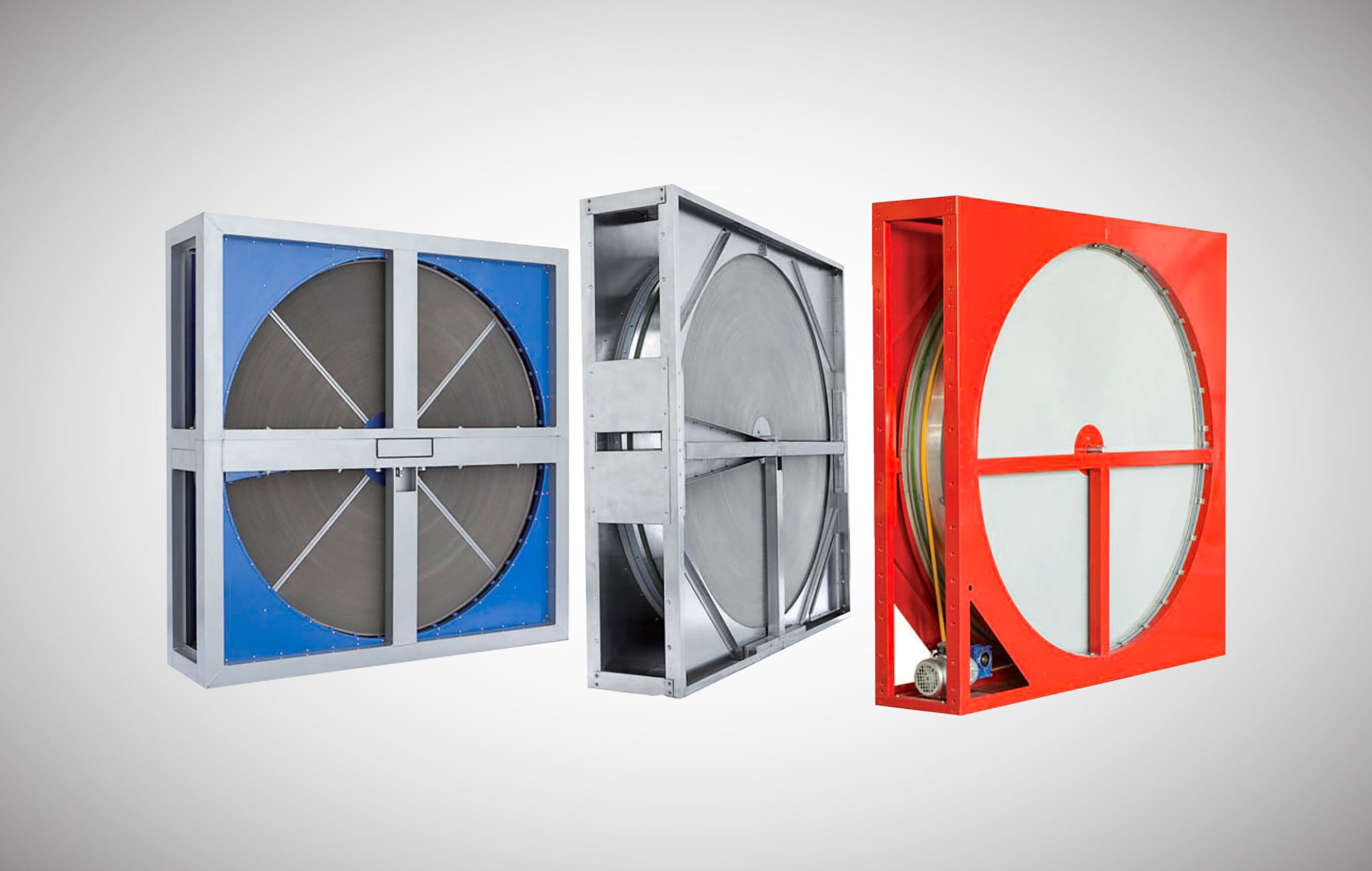
The Heat Recovery Wheel is a key energy-saving component that transfers heat between the exhaust and intake air streams, reducing the energy load on the HVAC system.
Repair vs Replacement:
Repair:
If the wheel is dirty, causing reduced efficiency, cleaning and maintenance can restore it to full functionality.
If the bearings or seals are worn out, they can typically be replaced or lubricated.
Minor structural damage (such as dents or cracks) can often be repaired with special bonding agents or welding, depending on the wheel's material.
Replacement:
If the wheel’s material (e.g., aluminum, desiccant, or silica gel) is degraded and unable to transfer heat effectively, replacement is typically required.
If the wheel is severely damaged, such as cracks, warping, or major leaks, it may be more cost-effective to replace it.
If repairs are frequent or costly, replacing the unit might be more economical in the long run.
Repair Process:
Inspection: Check for damage, dirt, and wear on the wheel, bearings, and seals.
Cleaning: Clean the wheel and internal components (removing dirt, mold, and scale buildup).
Seal/Bearing Replacement: Replace worn seals or bearings to ensure proper rotation.
Re-balance and Test: Once repaired, balance the wheel and run operational tests to verify performance.
Replacement Process:
Removal of Old Unit: Remove the damaged or old heat recovery wheel.
Install New HRW: Place the new wheel and ensure proper alignment with the casing and seals.
Rebalance and Test: Ensure that the new HRW is running smoothly, without excessive vibrations, and perform operational tests.